Source Heavy Duty Boat Toggle Switch for Marine, Automotive, and Machinery
Find and compare 30 heavy duty boat toggle switch options from verified Chinese manufacturers. Buyers can evaluate specifications like IP68 ratings, voltage, and customization availability for marine, automotive, and machinery applications.
Key considerations
Products List







Comprehensive Sourcing Guide
Strategic Sourcing Guide for Heavy Duty Boat Toggle Switches
Sourcing heavy-duty boat toggle switches requires a disciplined approach that balances marine environmental resilience with electrical reliability. In the context of B2B procurement, the term "heavy duty" implies components designed to withstand vibration, moisture, and continuous cycling in demanding environments. Buyers must navigate a complex landscape of technical specifications, certification requirements, and supplier capabilities to ensure that the selected switches meet the rigorous standards of marine applications. This guide provides a structured framework for evaluating potential suppliers and products, focusing on the critical attributes observed in the current market, such as IP68 ratings, specific voltage limits, and diverse customization options.
Technical Specifications and Electrical Ratings
The foundation of a successful procurement strategy lies in a precise understanding of the technical specifications required for marine environments. Heavy-duty toggle switches are not generic components; they must be engineered to handle specific electrical loads and environmental stressors. When evaluating products, buyers should look for switches that explicitly define their contact resistance and rated current capabilities. For instance, observed market data indicates that certain high-current switches are available with contact resistance limits of 20A maximum, which is a critical parameter for preventing voltage drops and overheating in high-load marine circuits.
Voltage ratings are equally paramount. Marine electrical systems often operate at 12V or 24V DC, but the switches must be rated for higher AC voltages to ensure safety margins and compatibility with shore power connections. Available product data highlights switches rated for 125VAC and 250VAC, with specific configurations such as 3A at 125VAC and 1A at 250VAC. These ratings dictate the maximum power the switch can safely interrupt. Buyers must verify that the switch's rated voltage exceeds the maximum potential voltage in their specific application to prevent arcing and contact welding.
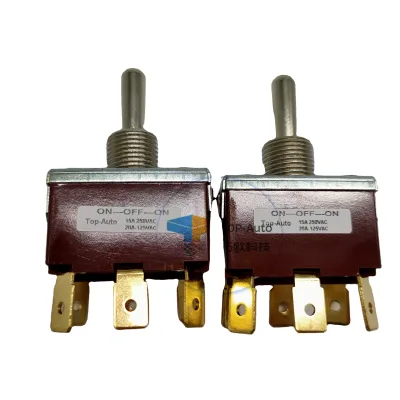
The physical structure of the switch also plays a vital role in its heavy-duty classification. The "Dual-Pole Two-Position" type is a common configuration for marine applications, allowing for the control of two separate circuits simultaneously or providing a more robust connection path. Furthermore, the presence of an integrated lamp is a significant feature for visibility in low-light conditions, a common scenario on boats. Procurement teams should distinguish between switches with lamps and those without, as this affects the internal wiring complexity and the overall cost. The color of the switch, typically black or white, should be selected based on the aesthetic requirements of the vessel's interior or exterior panels, ensuring the component blends seamlessly with the existing design.
Environmental Resilience and Protection Standards
Marine environments are notoriously hostile to electronic components due to the constant presence of saltwater, humidity, and UV radiation. Therefore, the ingress protection (IP) rating is a non-negotiable metric for heavy-duty boat switches. The observed market data explicitly mentions an IP68 rating for specific toggle switches. An IP68 rating signifies that the device is dust-tight and can be continuously immersed in water under conditions specified by the manufacturer. This level of protection is essential for switches located in areas prone to splashing or temporary submersion, such as engine compartments or exterior helm stations.
Beyond the IP rating, the physical construction must resist corrosion. While specific material compositions are not always listed in general product summaries, the "Waterproof Toggle Switch" designation often implies the use of corrosion-resistant materials or protective coatings. Buyers should verify that the switch housing and internal contacts are treated to withstand salt spray corrosion. Additionally, the "SGS Electronical Micro Dust-Proof" attribute observed in the market suggests that third-party testing has confirmed the switch's ability to prevent fine particulate ingress, which is crucial for maintaining electrical integrity in dusty or sandy marine environments.
The operating temperature range and vibration resistance are also critical, though specific numerical ranges may vary by manufacturer. Heavy-duty switches for boats must maintain their mechanical and electrical properties despite the constant vibration of the vessel. The "High Current" attribute observed in the product listings indicates that these switches are designed to handle the thermal stress associated with high amperage loads, which is common in marine lighting, pumps, and navigation systems. Procurement teams should request test reports or datasheets that confirm the switch's performance under simulated marine vibration and temperature cycling conditions.
Compliance, Certification, and Regulatory Adherence
Navigating the regulatory landscape is a critical component of sourcing heavy-duty marine switches. Different regions have specific certification requirements that must be met to ensure legal compliance and insurance validity. The observed product data lists a comprehensive set of certifications, including CCC (China Compulsory Certification), ISO, CE, RoHS, and UL. These certifications serve as independent verification of the product's safety, environmental compliance, and quality management systems.
The CE mark indicates conformity with health, safety, and environmental protection standards for products sold within the European Economic Area. For marine equipment, this is often a baseline requirement. The RoHS (Restriction of Hazardous Substances) directive ensures that the switch does not contain restricted hazardous materials, which is increasingly important for environmental compliance and disposal regulations. The UL (Underwriters Laboratories) certification is particularly significant for the North American market, as it verifies that the product has been tested for fire and electrical safety hazards.
ISO certification, specifically ISO 9001 for quality management, indicates that the manufacturer follows a standardized process for ensuring product quality. While the specific ISO standard number is not always detailed in general listings, the presence of an ISO certification suggests a commitment to consistent manufacturing practices. Buyers should verify that the specific certification applies to the manufacturing facility and the specific product line being sourced. It is also important to note that some products may carry the CCC mark, which is mandatory for certain electrical products sold in China. When sourcing for international markets, buyers must ensure that the supplier can provide valid, up-to-date certificates that are recognized by the destination country's regulatory bodies.
Cost Drivers and Pricing Dynamics
Understanding the cost structure of heavy-duty boat toggle switches is essential for budgeting and negotiation. The observed price range in the market spans from $0.10 to $28.13 USD, a wide variance that reflects differences in quality, certification, and customization. The lower end of the price spectrum typically corresponds to standard, non-customized switches with basic certifications and standard packaging. In contrast, the higher price points are often associated with switches featuring advanced certifications like UL or CE, specialized marine-grade materials, and custom configurations such as integrated lamps or specific color options.
The Minimum Order Quantity (MOQ) is another significant cost driver. The observed MOQ range is from 1 to 2000 units. For buyers with smaller requirements, suppliers with low MOQs (e.g., 1 or 10 units) may be more accessible, though the per-unit cost will likely be higher. Conversely, buyers planning large-scale procurement can leverage economies of scale by ordering in bulk, potentially reducing the per-unit cost significantly. However, high MOQs may require a larger upfront capital investment and efficient inventory management.
Customization is a key factor influencing cost. The availability of customization options, such as specific actuator shapes, lamp types, or color schemes, adds value but also increases the unit price and potentially the lead time. Buyers should weigh the cost of customization against the operational benefits it provides. For example, a custom-colored switch with an integrated lamp may cost more but could reduce installation time and improve user experience on the vessel. Additionally, the packaging method, ranging from simple plastic bags to standard export cartons, can impact shipping costs and the risk of damage during transit.
Typical Applications and Usage Scenarios
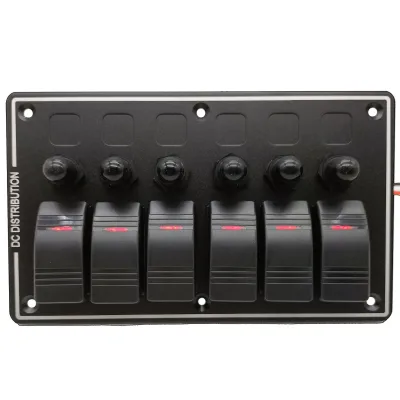
Heavy-duty boat toggle switches are versatile components used across a wide range of marine and related applications. The observed product data indicates usage in vehicles, communication equipment, machinery, electrical appliances, digital products, and toys. In the specific context of boating, these switches are commonly employed for controlling navigation lights, bilge pumps, windlasses, and battery isolators. The "Multi Control Switch" attribute suggests that some models are designed to manage multiple circuits from a single panel, which is highly efficient for helm stations where space is at a premium.
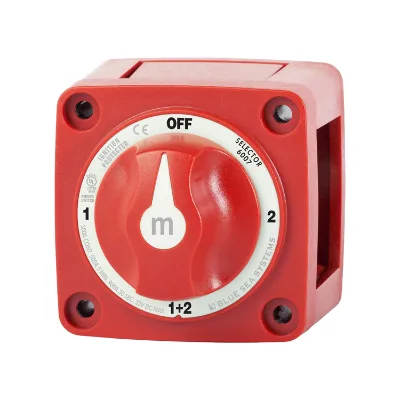
The "Start Button, Reset Button, Check Button, Control Button, Limit Button, Control Switch, Change-over Switch, Disconnector, Playback Switch" usage categories highlight the versatility of these components. In marine applications, change-over switches are frequently used to select between different power sources, such as switching between shore power and onboard batteries. Disconnectors are critical for isolating electrical systems during maintenance or in emergency situations. The "Normal Open" and "Single-pole on-off" types are standard for simple on/off control of lighting and small appliances.
For communication and digital products, the switches must be reliable to prevent signal loss or equipment failure. The "High Current" capability ensures that these switches can handle the power demands of larger marine electronics. The "With Lamp" and "Without Lamp" options allow for flexibility in design, depending on whether visual feedback is required for the specific application. Buyers should carefully match the switch's intended usage with the specific demands of their vessel's electrical system to ensure optimal performance and safety.
Supplier Evaluation and Quality Control
Evaluating suppliers requires a thorough assessment of their manufacturing capabilities, quality control processes, and track record. The observed product data indicates that many suppliers are based in China, with specific origins noted in locations like Ningbo. This concentration of manufacturing hubs suggests a robust supply chain, but buyers must verify the specific capabilities of each supplier. Key evaluation criteria include the supplier's ability to provide valid certifications, their experience with marine-grade products, and their quality control protocols.
Quality control should be a priority throughout the procurement process. Buyers should request samples to verify the physical build quality, including the durability of the actuator, the tightness of the housing, and the integrity of the electrical contacts. The "Condition: New" attribute confirms that the products are not refurbished, but buyers should still inspect samples for any signs of manufacturing defects. Additionally, the "Standard Export Carton" packaging suggests that the supplier is experienced in shipping goods internationally, which is a positive indicator of their logistical capabilities.
Suppliers should also demonstrate a commitment to continuous improvement and compliance. The presence of multiple certifications (CCC, ISO, CE, RoHS, UL) indicates a supplier that invests in meeting international standards. Buyers should verify that these certifications are current and applicable to the specific products being sourced. Furthermore, the ability to offer customization is a sign of a flexible and responsive supplier. Buyers should assess the supplier's lead times and communication responsiveness to ensure they can meet project deadlines.
Long-Term Procurement and Supply Chain Stability
Long-term procurement success depends on establishing stable relationships with reliable suppliers and ensuring supply chain continuity. The observed product range includes various models, such as T60-T, KN-32, MRS-101-8, and FB1654, indicating a diverse portfolio that can meet different needs. However, buyers should be mindful of the potential for model discontinuation or specification changes. It is advisable to secure long-term agreements that guarantee the availability of critical components and allow for consistent quality.
The "Standard" and "IP68 rating" attributes highlight the importance of selecting products that will remain relevant and compliant over time. As marine regulations evolve, suppliers must be able to adapt their products to meet new standards. Buyers should prioritize suppliers who demonstrate a proactive approach to compliance and product development. Additionally, the "Weight: 0.3G" and other specific attributes should be considered in the context of long-term maintenance and replacement. Lightweight components may be easier to install, but durability and longevity are paramount in marine environments.
In conclusion, sourcing heavy-duty boat toggle switches requires a meticulous approach that considers technical specifications, environmental resilience, compliance, cost, and supplier reliability. By leveraging the observed market data and adhering to strict quality control measures, buyers can secure high-performance switches that meet the demanding requirements of marine applications. The wide range of available options, from basic on-off switches to complex multi-control units, provides ample opportunity to find the perfect fit for any vessel's electrical system.
FAQs
What certifications do heavy duty boat toggle switches typically have?
These switches typically carry CCC, ISO, CE, RoHS, and UL certifications. Buyers should verify that the specific certificates match the destination country's regulatory requirements for marine electrical equipment to ensure compliance and safety.
How does the IP68 rating benefit marine applications?
An IP68 rating ensures the switch is dust-tight and can be continuously immersed in water. This protection is essential for engine compartments or exterior helm stations where exposure to saltwater and humidity is constant.
Which voltage ratings are suitable for boat electrical systems?
Switches are commonly rated for 125VAC and 250VAC to ensure safety margins for shore power connections. Buyers must verify the rated voltage exceeds the maximum potential voltage in their specific marine circuit to prevent arcing.
Can I customize the color and lamp features of these switches?
Customization is available for colors like black and white, as well as lamp options with or without illumination. Custom configurations may increase unit costs and lead times but allow for better integration with vessel aesthetics.
What is the typical minimum order quantity for these switches?
The minimum order quantity ranges from 1 to 2000 units depending on the supplier and customization level. Smaller orders may have higher per-unit costs, while bulk purchases leverage economies of scale for better pricing.
Where are these heavy duty switches primarily manufactured?
Most products originate from China, with specific manufacturing hubs noted in locations like Ningbo. Buyers should confirm the supplier's origin to assess shipping logistics and potential tariffs for their specific import requirements.